What is an implant-supported bridge and how does it differ from a traditional bridge?
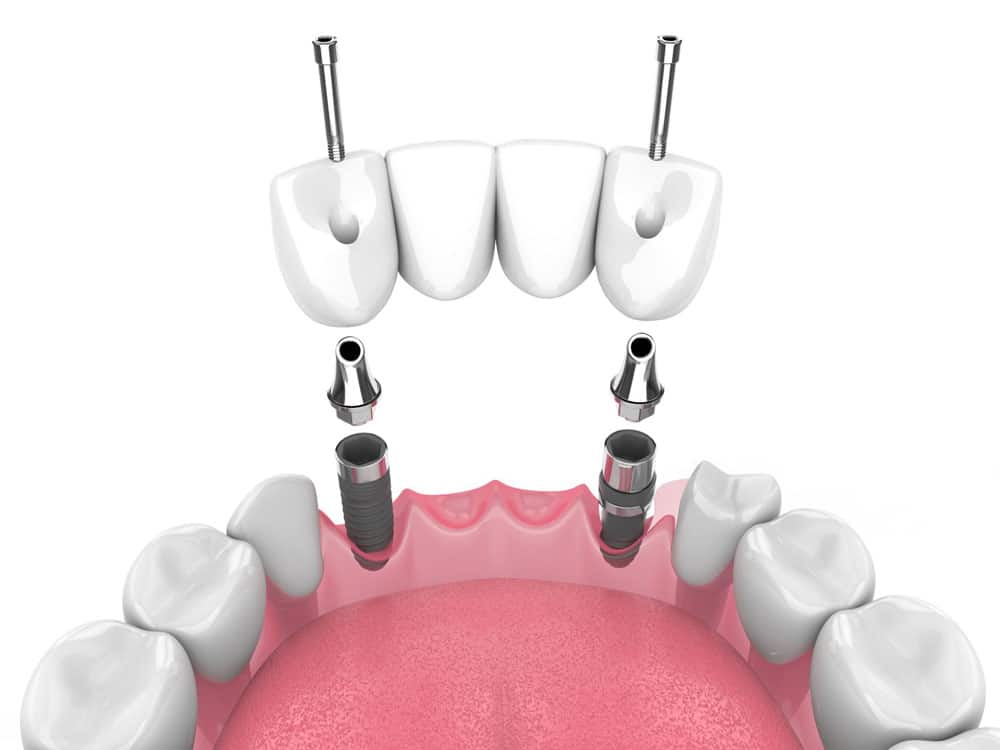
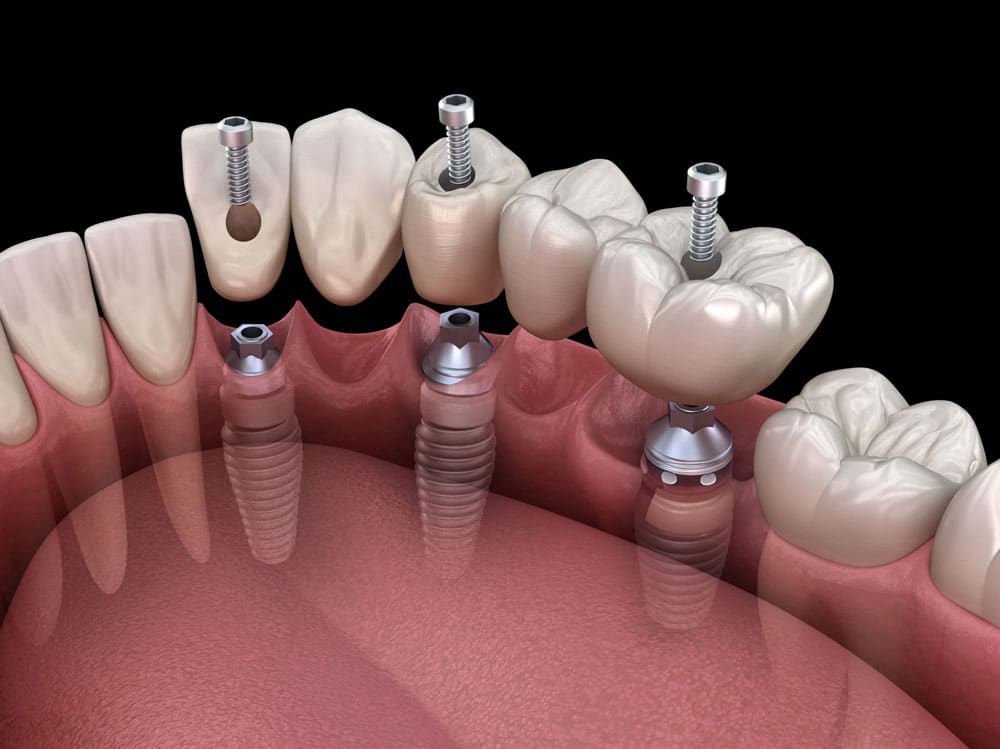
An implant-supported bridge uses dental implants to secure it where a traditional bridge is supported by adjacent teeth that have crowns.
Who is a good candidate for an implant-supported bridge?
Good candidates are those who are missing several consecutive teeth and whose natural adjacent teeth are not strong enough to support a traditional bridge. We also like those with good jawbone to support implants.
What are the steps involved in getting an implant-supported bridge and how long does it take?
First, implants are placed into the jawbone and we put a temporary bridge in. The healing period is 3 to 6 months. Then, we install a custom bridge attached to the implants.
What are the major advantages of implant-supported bridges?
Some of the biggest advantages are they don’t rely on abutment teeth for support and that preserves those teeth. Implant-supported bridges are more secure, prevent bone loss, and are more durable. They feel like real teeth.
Are there any drawbacks?
It takes more time to heal with implants. You have the interim period of healing before you can move forward with a permanent bridge. The cost is higher than with a traditional bridge and some may need bone grafting before getting implants.
How long can an implant-supported bridge last?
Implant-supported bridges can last significantly longer than traditional bridges, with estimates being 20 years or more.
How do I care for an implant-supported bridge after placement?
Maintenance is similar to natural teeth. Keep up with a standard oral hygiene routine that includes brushing and flossing. Go to regular dental check-ups and avoid sticky or hard foods.
Will my dental insurance cover an implant-supported bridge?
Coverage varies: some plans cover part of the cost but many do not cover implants fully. We can check for you.